Train suitcase
Foucault's PendulumAglie’s suitcase is a deceptively ordinary parcel whose changing contents and meaning make it the mechanism of Belbo’s entrapment. Presented as a favor involving antique books, it is left aboard a train and reported as a bomb; the resulting police alarm makes Belbo appear to be a terrorist and gives his pursuers leverage to demand the Templars’ map.
A favor arranged by Aglie
Aglie asks Belbo to carry a small suitcase from Milan to Bologna, where it will remain on the train for a correspondent to collect in Florence. He describes its contents as a dozen valuable eighteenth-century bound volumes arriving from Paris, and says another engagement prevents him from delivering them himself. The request is framed as a minor inconvenience between friends, not as a risky act of transport.
Aglie has made the handoff unusually precise. He reserves Belbo seat 45 in car 8 as far as Rome, explaining that the extra distance ensures the seat will remain unoccupied in Bologna and Florence. He does not buy Belbo’s ticket, lest the gesture seem like an attempt to settle his debt. Belbo accepts the explanation and the favor; after their previous encounter, he thinks Aglie is a gentleman and imagines he may send a case of rare wine in thanks.
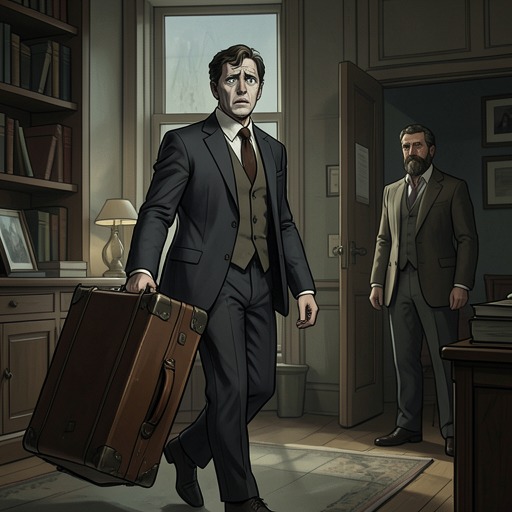
On Wednesday morning, Belbo reaches the station early and finds Aglie beside car 8 with the suitcase. It is fairly heavy but not bulky. Belbo places it above seat 45, settles in with his newspapers, and rides toward Bologna. The object is present from the start, but its weight and inconspicuous size disclose nothing about the trap being assembled around it.
A staged suspicion on the train
A bearded passenger sits beside Belbo and makes conversation with the other travelers. His remarks about the heat, air-conditioning, clothing, and Belbo’s English jacket and maroon tie seem like idle sociability; Belbo answers briefly and returns to his newspaper. When asked about his work, he says he is employed by a publishing firm specializing in books on Arab metaphysics, hoping to frighten the man. The passenger appears alarmed. The exchange supplies details that will later be recast as suspicious clues.
At Bologna, Belbo rises to get off. The bearded man reminds him not to forget the suitcase. Belbo says a friend will collect it in Florence and asks his neighbor to keep an eye on it. The neighbor promises to do so. In the moment, the request sounds like a routine arrangement for an unattended bag; in retrospect, it places the apparent discovery of danger in the hands of the man who helped create it.
The bearded passenger then voices suspicions to the compartment. Belbo has left a suitcase behind, he argues, and his reserved seat ran to Rome although he disembarked in Bologna. A passenger planning a terrorist attack might claim that someone else would collect the parcel. He tells the chief conductor that he cannot bear the tension and that a mistake is preferable to dying. The train stops in the mountains; the passengers wait anxiously along the tracks while the bomb squad arrives.
The experts open the suitcase and find a timer and explosive set to detonate around the train’s arrival in Florence, powerful enough to kill dozens. The news account presents the parcel as a bomb and Belbo as the man who abandoned it. But the narrator supplies the crucial reversal: the suitcase had contained Aglie’s books. The contrast between the harmless delivery Belbo agreed to carry and the deadly device reported by the authorities is the center of the frame-up.
The suitcase becomes evidence
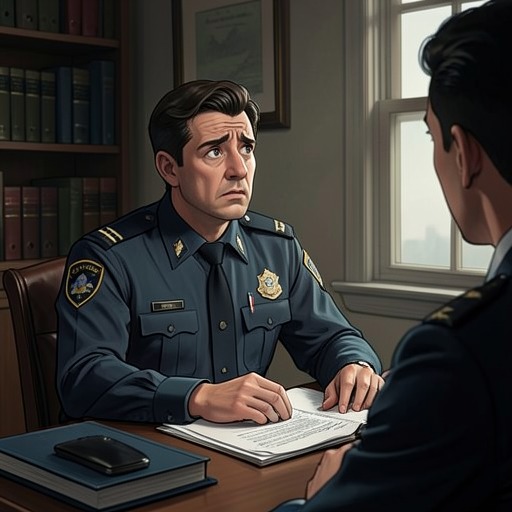
The police cannot find the bearded passenger. They speculate that he changed cars and got off in Florence to avoid appearing in the newspapers, then appeal for him to contact them. The other travelers remember Belbo with striking precision: a taciturn man in a blue English jacket without gold buttons and a maroon tie, apparently trying not to attract attention. His explanation of his work is distorted through varying recollections into references to a paper, a publisher, physics, methane, or metempsychosis, though the witnesses agree that Arabs were involved.
A police sketch appears on television, and stations and carabiniere headquarters have been alerted. Two Libyan citizens are detained in Bologna. The drawing does not resemble Belbo, yet the report’s details make him resemble the figure the public is being asked to recognize. The suitcase’s role has therefore expanded beyond its reported contents: its presence, together with Belbo’s seat and clothing, organizes scattered coincidences into an accusation.
Belbo learns of the incident at home, watching the news after returning to Milan. He realizes plainly that the unidentified man with the suitcase is supposed to be him, even though the case he carried held Aglie’s books. He tries to call Aglie but receives no answer. That silence leaves Belbo without the person who arranged the handoff or any immediate way to explain what happened.
The following day, a foreign voice calls with an offer that presents itself as disinterested kindness. The caller warns Belbo that he should never have acted as a courier without checking the package, then makes the threat explicit: someone could identify him as the occupant of seat 45. The suitcase’s false public identity as a bomb has become leverage in a private demand.
From parcel to coercion
The caller offers a way to avert police exposure if Belbo will say where the Templars’ map is. Milan is described as too dangerous because the public knows the suspected passenger boarded the Intercity there; Paris is proposed as neutral ground. Belbo is urged to leave before anyone identifies him and told to meet the bearded man at Librairie Sloane, 3 rue de la Manticore, at noon on Wednesday, June 20. The caller promises that the man will direct him to other associates and that Belbo will eventually disclose what he knows in time for the summer solstice.
The suitcase thus links several stages of the scheme: Aglie’s apparently courteous request, Belbo’s unwitting transport, the bearded passenger’s planted suspicion, the bomb report, and a threat tied to the Templars’ map. Its ordinary appearance helps the arrangement pass as a favor; its alleged explosive contents then make Belbo’s innocent actions look criminal. By the end of the episode, the case has not merely been left behind on a train. It has changed Belbo’s position, turning him from a man doing Aglie a service into a compromised fugitive being summoned to Paris.